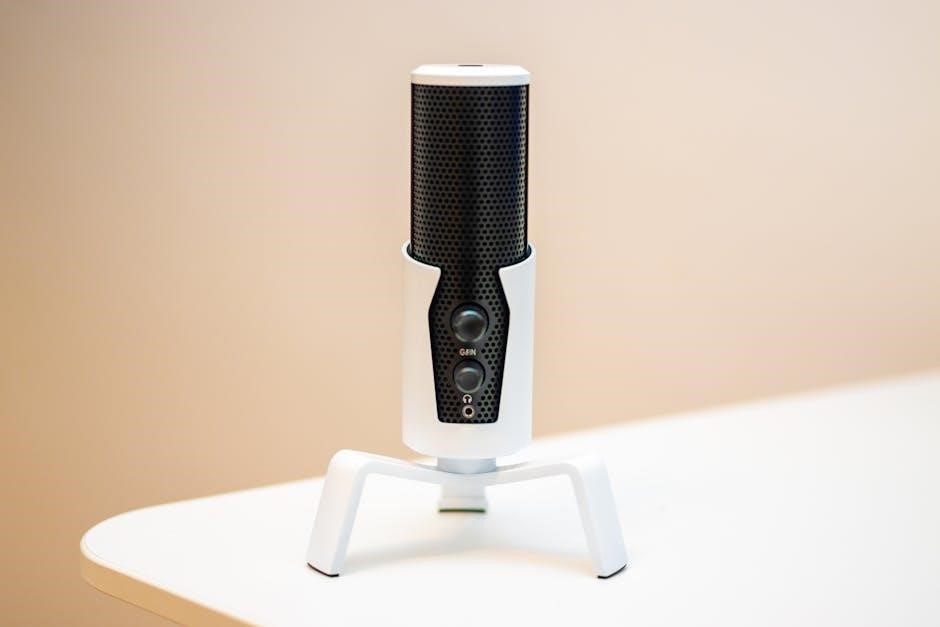
The HyperX QuadCast S, a vibrant addition to gaming hardware, offers excellent audio for streamers, podcasters, and content creators. It’s a dynamic USB microphone designed for ease of use and quality.
What is the HyperX QuadCast?
The HyperX QuadCast is a USB condenser microphone renowned for its versatility and user-friendly design. Initially stemming from Kingston’s gaming RAM brand, HyperX expanded into gaming hardware, and the QuadCast became a standout product. Featuring dynamic RGB lighting (in the ‘S’ version), it boasts 100 LEDs and intuitive polar pattern selection. It supports high-resolution audio recording at 32-bit/192kHz, making it ideal for streaming, podcasting, and content creation.
Target Audience: Who is this microphone for?
The HyperX QuadCast is perfectly suited for individuals heavily involved with audio in their daily routines. This includes content creators, livestreamers on platforms like Twitch, podcast hosts seeking clear audio, and anyone desiring improved sound quality for online communication. It’s a great alternative to the Blue Yeti, offering a simple plug-and-play experience for excellent audio results.

Unboxing and Components
The QuadCast S boasts 100 LEDs for stunning RGB gradients and an intuitive polar pattern ring. It includes a redesigned shock mount for easy microphone removal.
What’s in the Box?
Upon unboxing, you’ll find the HyperX QuadCast S microphone itself, prominently featuring the RGB lighting. Included is a redesigned, robust shock mount to minimize vibrations and handling noise. A detachable USB cable ensures easy connectivity, and a quick-start guide provides initial setup instructions. The box also contains important safety and warranty information for your new microphone.
Microphone Overview: Physical Features
The HyperX QuadCast S boasts a striking design, dominated by 100 LEDs creating customizable RGB gradients. It features an intuitive LED ring indicating the selected polar pattern. A redesigned shock mount allows for easy microphone removal. The microphone’s sturdy build quality ensures durability, while its overall aesthetic appeals to gamers and content creators alike.
Setting Up Your HyperX QuadCast
Setting up the QuadCast is remarkably simple; it’s designed for plug-and-play functionality, offering immediate use with minimal configuration needed for most systems.
Connecting to Your Computer
Connecting the HyperX QuadCast is straightforward. Utilize the included USB cable to link the microphone directly to an available USB port on your computer. The QuadCast is designed to be bus-powered, eliminating the need for external power sources. Ensure a secure connection for optimal performance. Once connected, your computer should automatically detect the microphone, preparing it for configuration and use within your preferred software.
Installing Drivers (if necessary)
Generally, the HyperX QuadCast operates on a plug-and-play basis, meaning drivers are typically not required for basic functionality. However, to unlock the full potential, particularly for advanced features like RGB customization via NGENUITY, downloading and installing the latest drivers from the official HyperX website is recommended. This ensures compatibility and optimal performance across various operating systems.

Understanding the Controls
The QuadCast features intuitive controls for polar patterns, gain adjustment, and a convenient mute button, allowing for quick and easy audio customization during use.
Polar Patterns: Cardioid, Stereo, Bidirectional, Omnidirectional
The HyperX QuadCast boasts four distinct polar patterns for versatile recording. Cardioid captures sound directly in front, ideal for solo streaming. Stereo creates a wider soundstage. Bidirectional records from front and back, perfect for interviews. Omnidirectional picks up sound from all directions, suitable for group recordings or ambient capture. Switching is intuitive via the top dial.
Gain Control and Sensitivity
Adjusting the gain on the HyperX QuadCast is crucial for optimal audio levels. The gain control knob, located on the microphone, dictates the input sensitivity. Higher gain amplifies quieter sounds, but can introduce noise. Finding the sweet spot ensures clear recordings without distortion. Monitor audio levels closely during setup for best results.
Mute Button Functionality
The HyperX QuadCast features a convenient, large mute button on top of the microphone. A simple tap instantly silences the audio input, indicated by the LED ring turning red. This is ideal for quick privacy or to avoid unwanted sounds during streams or recordings. The button provides tactile feedback, confirming mute status.
Audio Quality and Performance
The HyperX QuadCast delivers clear and consistent audio, rivaling the Blue Yeti. Its dynamic capsule captures rich tones, making it suitable for various recording applications.
Sound Characteristics: Clarity and Tone
The HyperX QuadCast microphone excels in providing a balanced and detailed sound profile. It captures vocals with impressive clarity, minimizing muddiness and delivering a professional tone. The dynamic capsule ensures a rich, full sound, suitable for streaming, podcasting, and recording music. It offers a warm and inviting audio quality, making voices sound natural and engaging, even without extensive post-processing.
Noise Reduction Capabilities
The HyperX QuadCast incorporates a robust internal shock mount and a built-in pop filter to minimize unwanted noise. While not active noise cancellation, these features effectively reduce plosives, vibrations, and some background hum. The cardioid polar pattern further assists by focusing on the sound source, rejecting off-axis noise for cleaner recordings in less-than-ideal environments.
Comparison to Blue Yeti
For years, the Blue Yeti dominated the USB microphone market, but the HyperX QuadCast presents a strong contender. Both offer multiple polar patterns and USB connectivity. However, the QuadCast boasts a more streamlined design and intuitive controls, including a visual polar pattern indicator. Audio quality is comparable, though some prefer the QuadCast’s slightly warmer tone.
RGB Lighting Customization (QuadCast S)
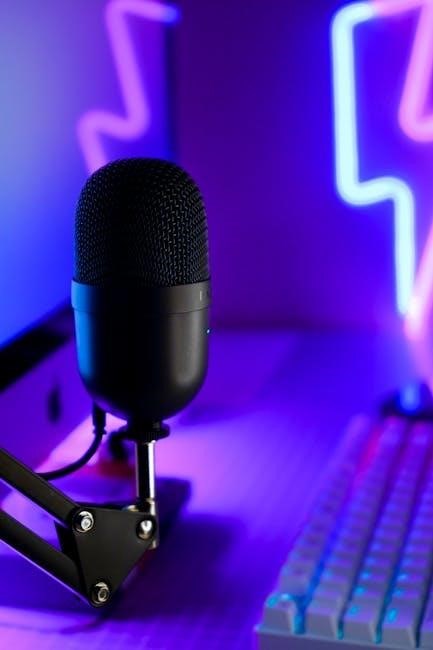
The QuadCast S features 100 LEDs, enabling complex RGB gradients customizable via the HyperX NGENUITY software for personalized lighting effects and aesthetics.
Using the HyperX NGENUITY Software
The HyperX NGENUITY software is central to customizing the QuadCast S’s RGB lighting and audio settings. It allows users to personalize LED effects, choosing from static colors to dynamic gradients. Beyond visuals, NGENUITY enables adjustments to gain, monitoring, and even creates custom profiles for different applications. The intuitive interface simplifies complex settings, ensuring optimal audio and a visually appealing setup; Download it from the official HyperX website for full control.
Customizing LED Effects
With 100 LEDs, the QuadCast S offers extensive RGB customization via HyperX NGENUITY. Users can select static colors, breathing effects, or complex gradients to match their setup. The software allows synchronization with games and streams, reacting to in-game events or voice activity. Experiment with different patterns and brightness levels to create a unique and immersive visual experience, perfectly complementing your content.
Troubleshooting Common Issues
Common problems include no sound, static, or the microphone not being recognized. Checking connections, drivers, and software settings are crucial first steps for resolution.
No Sound Issues
If no sound is detected, verify the HyperX QuadCast is correctly selected as the default input device in your computer’s sound settings. Ensure the microphone isn’t muted via the button on the mic itself. Double-check the USB connection to your PC. Try a different USB port, and restart your computer to refresh the system; Confirm the application you’re using recognizes the microphone as an input source.
Static or Background Noise
To minimize static or background noise, reposition the microphone away from electronic devices that could cause interference. Adjust the gain control; excessive gain amplifies noise. Utilize a pop filter and shock mount to reduce plosives and vibrations. Ensure a stable USB connection. Experiment with different polar patterns to isolate your voice and reduce ambient sounds.
Microphone Not Recognized
If your HyperX QuadCast isn’t recognized, first check the USB connection to your computer, trying a different port if needed. Ensure the microphone is selected as the default input device in your system settings. Restart your computer and the microphone. Verify driver installation via the HyperX NGENUITY software, reinstalling if necessary.
Advanced Settings and Optimization
Optimizing bitrate and sample rate within software like OBS or Audacity enhances audio quality. Utilizing a pop filter and shock mount minimizes unwanted noise and vibrations.
Bitrate and Sample Rate Settings
For optimal audio fidelity, adjusting bitrate and sample rate is crucial. A higher bitrate (192kbps or 320kbps) delivers richer sound, while a 48kHz sample rate is standard for professional recordings. Experiment to find the sweet spot balancing quality and file size. Lower settings are suitable for voice-only content, conserving storage space, but potentially sacrificing clarity. The HyperX QuadCast supports up to 192kHz/32-bit for exceptional detail.
Pop Filter and Shock Mount Usage
Utilizing a pop filter minimizes plosive sounds – harsh ‘p’ and ‘b’ sounds – improving vocal clarity. A shock mount isolates the microphone from vibrations, reducing unwanted noise from desk bumps or movements. The QuadCast includes a redesigned shock mount for easy microphone removal. Positioning the filter a few inches from the mic yields the best results, ensuring clean, professional-sounding audio recordings.
HyperX QuadCast vs. HyperX QuadCast S vs. QuadCast 2
The QuadCast S adds RGB lighting, while the QuadCast 2 boasts upgraded audio quality and a redesigned shock mount for enhanced performance.
Key Differences and Upgrades
The original QuadCast established a strong baseline, but the QuadCast S introduced customizable RGB lighting with 100 LEDs, enhancing aesthetics. The QuadCast 2 represents a significant leap, featuring upgraded internals for improved audio fidelity, a redesigned shock mount for easier microphone removal, and support for higher bitrate/sample rate recording. These upgrades cater to professionals seeking superior sound quality and usability.
Which Model is Right for You?
If prioritizing budget and basic functionality, the original QuadCast remains a solid choice. For those desiring visual flair, the QuadCast S’s RGB lighting is appealing. However, content creators demanding top-tier audio and streamlined operation should invest in the QuadCast 2. It delivers superior performance and convenience, justifying the increased cost for professional results;
Software Integration
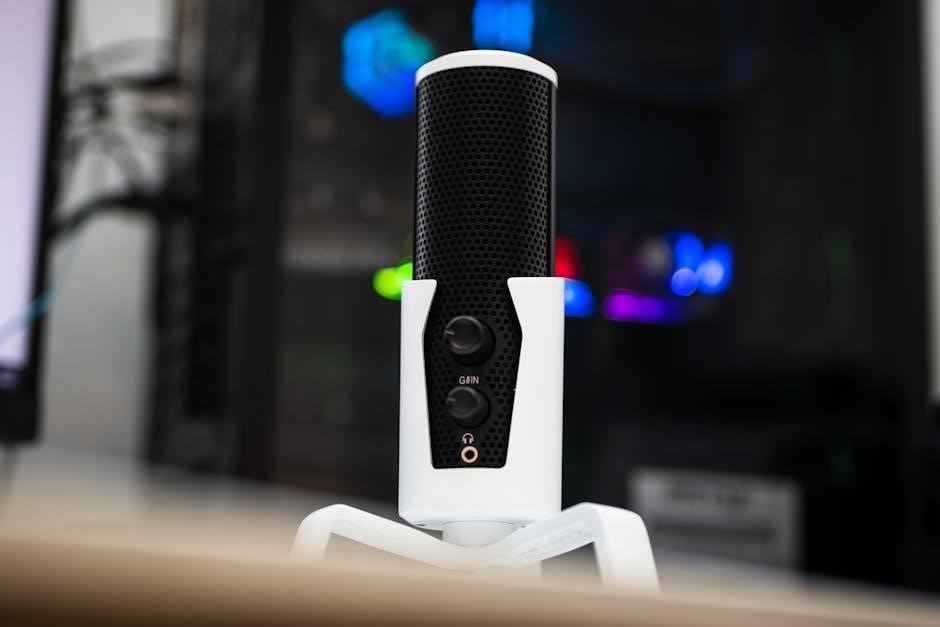
The HyperX QuadCast seamlessly integrates with popular streaming and recording software like OBS, Streamlabs, Audacity, and Adobe Audition for versatile use.
Compatibility with Streaming Software (OBS, Streamlabs)
The HyperX QuadCast demonstrates excellent compatibility with leading streaming platforms like OBS Studio and Streamlabs Desktop. Setup is generally plug-and-play, automatically recognized by the software. Users report reliable performance, delivering clear audio during live broadcasts and recordings. Adjusting input levels within the streaming software is straightforward, ensuring optimal sound quality for viewers. The microphone’s multiple polar patterns offer flexibility for various streaming scenarios, enhancing broadcast control.
Podcast Recording Software Compatibility (Audacity, Adobe Audition)
The HyperX QuadCast seamlessly integrates with popular podcasting software such as Audacity and Adobe Audition. It’s recognized as a straightforward audio input device, simplifying recording setup. Users consistently praise its clear audio capture, reducing the need for extensive post-processing. The selectable polar patterns are beneficial for solo recordings or interviews, offering versatile control over sound isolation and clarity during podcast production.
Maintenance and Care
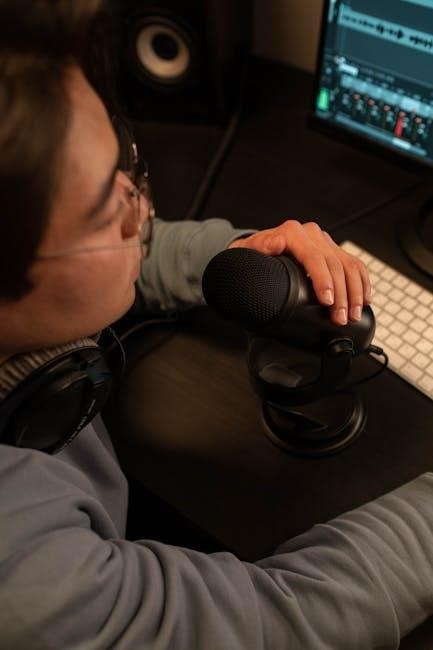
Regularly clean the HyperX QuadCast with a dry cloth to maintain optimal performance. Proper storage, away from dust and moisture, will extend its lifespan considerably.
Cleaning the Microphone
To ensure longevity and optimal audio quality, regularly clean your HyperX QuadCast. Always disconnect the microphone before cleaning. Use a soft, dry microfiber cloth to gently wipe down the microphone body and mesh grill. Avoid using liquids, solvents, or abrasive cleaners, as these can damage the sensitive components. For stubborn dust, a can of compressed air can be used cautiously to dislodge particles from the grill, maintaining clear sound capture.
Storing the Microphone
Proper storage protects your HyperX QuadCast from damage and ensures its continued performance. When not in use, disconnect the microphone and store it in a clean, dry location, away from direct sunlight and extreme temperatures. Consider using the original packaging or a padded case for added protection. Avoid placing heavy objects on top of the microphone, which could potentially damage the sensitive internal components.
Accessories and Add-ons
Enhance your QuadCast experience with recommended stands, mounts, pop filters, and windscreens for optimal audio quality and convenient positioning.
Recommended Stands and Mounts
To maximize the QuadCast’s performance, consider a robust desk stand or boom arm. A quality boom arm offers flexible positioning, freeing up desk space and ensuring optimal microphone placement. Popular choices include Rode PSA1+ or Blue Compass. Desk stands provide stability, but limit adjustability. Ensure compatibility with the QuadCast’s standard 5/8” thread. Investing in a good mount minimizes vibrations and improves audio clarity.
Pop Filters and Wind Screens
Enhance your recordings with a pop filter or wind screen for the HyperX QuadCast. These accessories minimize plosives – harsh ‘p’ and ‘b’ sounds – and breath noise, resulting in cleaner audio. Foam wind screens are ideal for reducing general background noise, while pop filters excel at taming plosives. Many bundles include these, but aftermarket options offer varied quality and fit.
Frequently Asked Questions (FAQ)
The HyperX QuadCast is largely plug-and-play, but optimal performance may require adjusting input levels within your operating system or software.
Is the HyperX QuadCast plug-and-play?
Generally, yes, the HyperX QuadCast functions as plug-and-play, simplifying setup for immediate use with most computers and recording software. However, achieving the best audio quality often involves minor adjustments. Users might need to configure input levels within their operating system’s sound settings or within their specific streaming or recording application to optimize the microphone’s performance and minimize background noise.
What operating systems are supported?
The HyperX QuadCast boasts broad compatibility, supporting both Windows and macOS operating systems. Specifically, it’s confirmed to work with Windows 10 and 11, as well as macOS 10.13 (High Sierra) and later versions. While primarily designed for these, compatibility with some Linux distributions may also be achievable, though potentially requiring additional configuration by the user.

Warranty Information
HyperX provides a standard warranty for the QuadCast microphone, typically covering defects in materials and workmanship for a specified period. Details vary by region.
HyperX Warranty Details
HyperX generally offers a two-year warranty on the QuadCast series microphones, covering manufacturing defects and malfunctions under normal use. This doesn’t cover damage from misuse, accidents, or unauthorized modifications. Proof of purchase is essential for any warranty claim. The warranty ensures repair or replacement at HyperX’s discretion, offering peace of mind to users regarding product reliability and longevity.
How to Claim Warranty
To initiate a warranty claim, contact HyperX support through their official website, providing your proof of purchase and a detailed description of the issue. They will likely issue a Return Merchandise Authorization (RMA) number and instructions for shipping the microphone. Ensure proper packaging to prevent further damage during transit; shipping costs may be the customer’s responsibility.
Where to Buy
The HyperX QuadCast is readily available at the official HyperX website, alongside major retailers like Amazon and Best Buy, offering convenient purchasing options.
Official HyperX Website
Visiting the official HyperX website (hyperx.com) provides a direct source for purchasing the QuadCast microphone and related accessories. You’ll find detailed product specifications, support resources, and often exclusive deals or bundles not available elsewhere. Direct purchase ensures authenticity and access to HyperX’s customer service for any potential issues or warranty claims. Explore the site for the latest models, including the QuadCast S and QuadCast 2, alongside helpful documentation.
Retailer Options (Amazon, Best Buy, etc.)
Numerous retailers carry the HyperX QuadCast microphone, offering convenience and competitive pricing. Amazon, Best Buy, and other electronics stores frequently stock all QuadCast models – S and 2 included – providing options for shipping and in-store pickup. Comparing prices across retailers is recommended to secure the best deal, and checking for sales events can yield significant savings.
Final Thoughts and Conclusion
The HyperX QuadCast series delivers impressive audio quality and user-friendly features, making it a strong contender in the USB microphone market. From the original QuadCast to the RGB-enhanced S and the upgraded 2, there’s a model to suit various needs and budgets. It’s a reliable choice for streamers, podcasters, and anyone seeking improved audio.