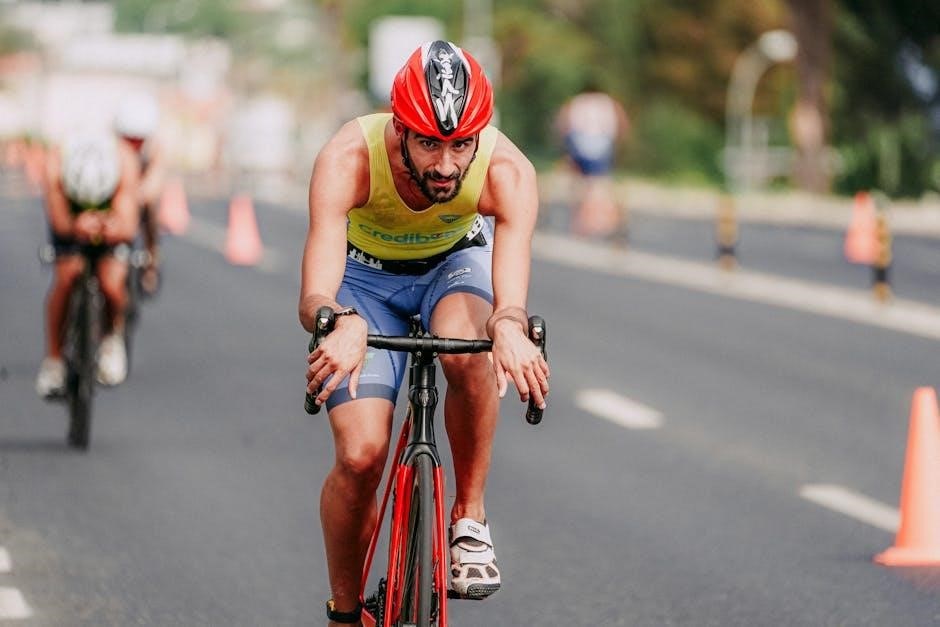
Olympic Triathlon Training Plan: A Comprehensive Guide
Embark on a transformative journey with a meticulously crafted plan, designed to propel you towards Olympic triathlon success! Several resources,
like those from Garmin and TrainingPeaks, offer 12-week programs.
These plans progressively build endurance, strength, and skill across swimming (1.5km), cycling (40km), and running (10km).
Beginner and intermediate options cater to varying fitness levels, ensuring a tailored experience.
Downloadable PDFs from ACRF and Campfire Endurance Coaching provide structured workouts, while 220 Triathlon offers a condensed six-week plan for time-constrained athletes.
The Olympic distance triathlon represents a significant challenge and a rewarding achievement for endurance athletes. This format, standardized for inclusion in the Olympic Games, comprises a 1.5km (0.9mi) swim, a 40km (25mi) bike ride, and a 10km (6.2mi) run – a demanding sequence requiring comprehensive preparation.
Successfully tackling this event necessitates a well-structured training plan, often available as a downloadable PDF from various sources. Resources like those offered by USA Triathlon, Garmin, and the Australian Cancer Research Foundation (ACRF) provide detailed programs, typically spanning 12 weeks.
These plans aren’t merely schedules; they are progressive roadmaps designed to build the necessary stamina, strength, and technique in each discipline. They cater to different experience levels, with options ranging from beginner to intermediate, ensuring athletes can find a suitable starting point.
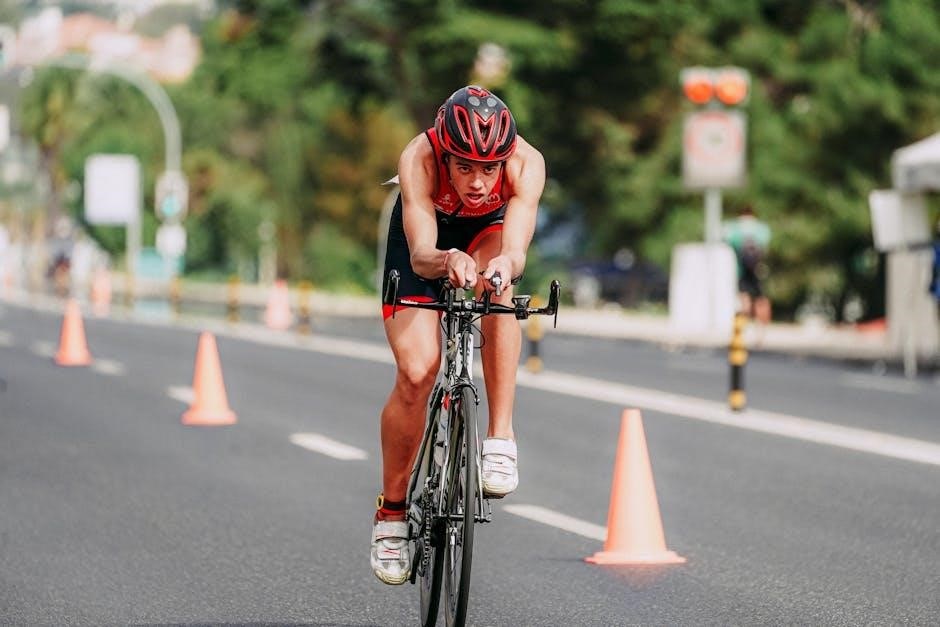
Understanding the demands of each leg is crucial. The swim requires efficient technique and open water adaptation, the bike demands sustained power and pacing, and the run tests cardiovascular fitness and mental fortitude. A comprehensive PDF plan will address all these facets.
Assessing Your Current Fitness Level
Before diving into an Olympic triathlon training plan – often found as a downloadable PDF – a realistic self-assessment is paramount. Many plans, like those from TrainingPeaks, assume a baseline level of fitness, requiring you to comfortably swim for 45 minutes, run for an hour, and bike for 90 minutes.
Honest evaluation prevents injury and ensures a productive training cycle. Consider your recent activity levels in each discipline. Have you consistently swum, cycled, and run? If not, a longer base-building phase will be necessary before commencing a structured plan.
Assess your swim technique, bike power output (if possible), and running pace. Identify any weaknesses. Are you a strong swimmer but a weaker runner? This informs where to focus initial training efforts.
Review the prerequisites outlined in the PDF plan you choose. If you fall short, don’t be discouraged; begin with a beginner-level plan or extend the base-building phase to bridge the gap. Accurate self-assessment is the foundation for success.
Essential Gear for Olympic Triathlon Training
Successfully executing an Olympic triathlon, guided by a PDF training plan, demands appropriate gear. Beyond the obvious – swimsuit, bike, and running shoes – several key items enhance performance and comfort.
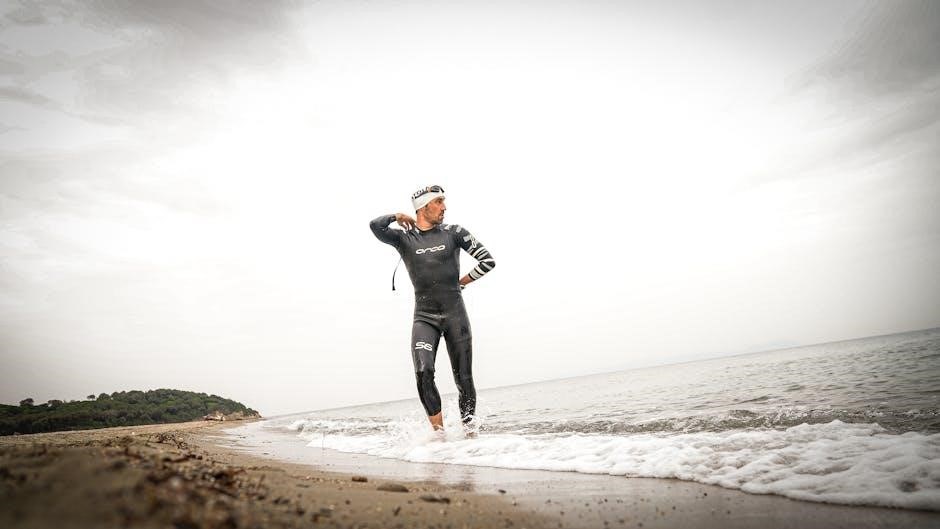
A well-fitted wetsuit is crucial for open-water swims, providing buoyancy and warmth. Cycling necessitates a helmet, cycling shorts with chamois padding, and cycling shoes with clipless pedals. Don’t forget sunglasses and sunscreen!
For running, moisture-wicking apparel and supportive shoes are essential. A triathlon-specific suit can save transition time, eliminating the need for separate clothing changes. Consider a GPS watch to track pace and distance.
Maintenance tools – a bike pump, multi-tool, and spare tubes – are vital. Review your chosen PDF plan; some may suggest power meters or heart rate monitors for precise training. Investing in quality gear improves your experience and helps you achieve your goals.
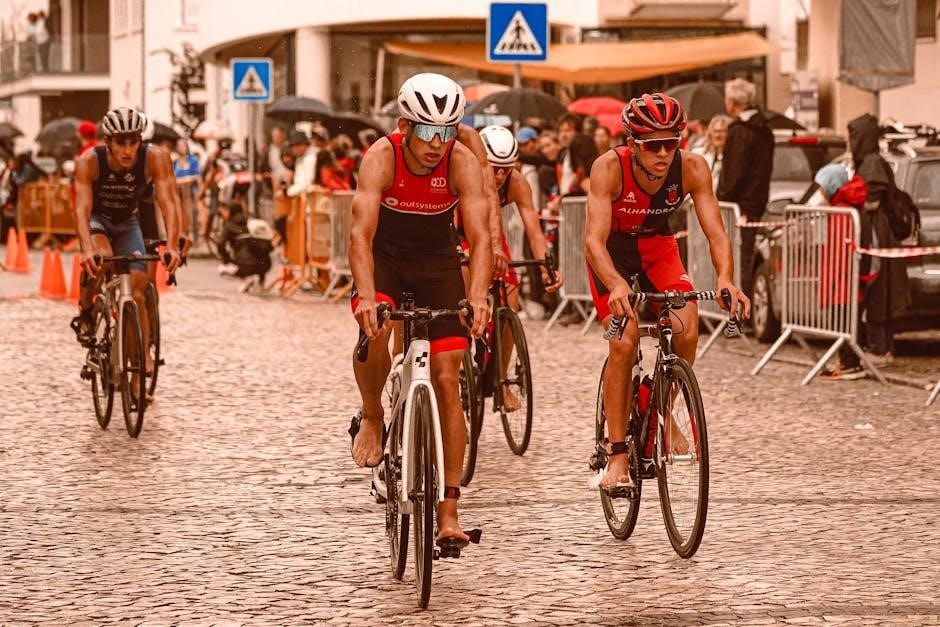
12-Week Olympic Triathlon Training Plan Overview
A 12-week plan, often available as a PDF, systematically prepares you for the Olympic distance. It progresses through base building, strength/endurance, and peak performance phases.
Weekly training volume typically ranges from 6 to 10 hours, incorporating swim, bike, and run sessions, with brick workouts for race simulation.
Phase 1: Base Building (Weeks 1-4)
The initial four weeks focus on establishing a solid foundation of endurance, crucial for supporting the more intense phases ahead. This phase, often detailed in downloadable PDF training plans from sources like Garmin and the Australian Cancer Research Foundation (ACRF), prioritizes consistent, low-intensity workouts.
For those with existing base fitness, this phase may be shorter, but remains vital for injury prevention and preparing the body for increased workload. Expect to gradually increase training volume across all three disciplines – swimming, cycling, and running – without significantly pushing intensity.
The goal is to build aerobic capacity and muscular endurance, enabling you to comfortably complete longer workouts in subsequent phases. This phase is about consistency and building habits, laying the groundwork for a successful Olympic triathlon journey. Focus on technique and form during this period, rather than speed.
Swim Training ౼ Base Phase
During the initial base building phase (Weeks 1-4), swim training centers around building endurance and refining technique. PDF training plans, such as those offered by TrainingPeaks and Garmin, typically emphasize consistent yardage over speed. Expect workouts focused on continuous swimming, aiming to comfortably cover distances relevant to the 1.5km Olympic distance swim.
Workouts may include drills to improve stroke efficiency and body position, alongside longer, steady-state swims. The focus isn’t on pushing your maximum pace, but rather on maintaining a consistent effort.
Beginners should prioritize completing the distance, while more experienced swimmers can incorporate some interval work at a moderate intensity. A typical week might include 2-3 swim sessions, gradually increasing the total distance swum each week. Remember to prioritize proper form to avoid injury and maximize efficiency.
Bike Training ౼ Base Phase
The base phase of bike training (Weeks 1-4), as detailed in many Olympic triathlon training PDFs like those from Garmin and TrainingPeaks, prioritizes building aerobic endurance. This involves long, steady-state rides at a conversational pace. The goal is to increase your time in the saddle and improve your body’s ability to utilize fat as fuel.
Expect to accumulate significant mileage each week, gradually increasing the length of your long ride. These plans often suggest incorporating hills to build strength, but maintaining a consistent cadence is key. Focus on comfortable gearing and efficient pedaling technique.
Beginners should aim for 2-3 rides per week, while more experienced cyclists might include 3-4. Brick workouts (bike followed immediately by a run) are typically introduced later, but this phase lays the foundation for those sessions.
Run Training ― Base Phase
During the initial four weeks of an Olympic triathlon training plan (as found in PDFs from sources like TrainingPeaks and Garmin), run training focuses on establishing a solid aerobic base. This means prioritizing easy-paced running, where you can comfortably hold a conversation. The emphasis is on time on your feet, not speed.
Expect to incorporate 2-3 runs per week, including a longer run that gradually increases in distance. These plans often recommend running on varied terrain to build strength and prevent overuse injuries. Pay attention to your form and cadence, striving for efficiency.
Avoid pushing the pace too hard during this phase. The goal is to build endurance and prepare your body for the more intense workouts to come. Listen to your body and take rest days when needed. This foundational work is crucial for success!
Phase 2: Strength & Endurance (Weeks 5-8)
Transitioning from base building (as detailed in Olympic triathlon training plan PDFs from sources like Garmin and TrainingPeaks), weeks 5-8 concentrate on boosting both strength and endurance. This phase introduces more challenging workouts across all three disciplines, demanding increased effort and commitment.
Expect to see the introduction of interval training for running and cycling, alongside longer, sustained efforts. Swim workouts will incorporate drills to improve technique and speed. Strength training, often overlooked, becomes vital for injury prevention and power development.
The weekly volume of training typically increases during this phase, requiring careful attention to recovery. Brick workouts – combining bike and run – are often introduced to simulate race conditions. This phase prepares you for the peak performance stage, building a robust foundation of fitness.
Swim Training ౼ Strength & Endurance Phase
Building upon the base established in earlier weeks (as outlined in Olympic triathlon training plan PDFs), swim training during weeks 5-8 shifts towards enhancing both strength and endurance. Expect a noticeable increase in workout intensity and complexity.
Interval sets become a cornerstone of this phase, incorporating varied distances and rest periods to improve speed and lactate tolerance. Drills focusing on technique – such as catch-up drill and fingertip drag – are maintained and refined. Longer continuous swims, pushing the boundaries of your aerobic capacity, are also included.
Workouts may incorporate the use of pull buoys and paddles to isolate specific muscle groups and build upper body strength. Focus is placed on maintaining proper form even when fatigued. This phase prepares you for the demands of the Olympic distance swim, building both speed and stamina.
Bike Training ౼ Strength & Endurance Phase
As detailed in various Olympic triathlon training plan PDFs, weeks 5-8 for cycling emphasize developing both strength and endurance, preparing you for the 40km course. This phase builds upon the base fitness established previously, increasing both volume and intensity.
Expect longer rides with sustained efforts at moderate intensity, alongside interval training sessions designed to improve your power and speed. Hill repeats become a key component, building leg strength and cardiovascular fitness. Tempo rides, sustained at a comfortably hard pace, are also incorporated.
Focus shifts towards maintaining a consistent cadence and efficient pedaling technique. Workouts may include specific drills to improve bike handling skills. Proper gearing and pacing strategies are practiced. This phase aims to build the muscular endurance and aerobic capacity needed to tackle the challenging bike leg of the Olympic distance triathlon.
Run Training ౼ Strength & Endurance Phase
During weeks 5-8 of an Olympic triathlon training plan PDF, running transitions to a strength and endurance focus, preparing you for the 10km run leg. Building on the base established earlier, this phase increases both mileage and intensity strategically.
Expect a blend of long, slow distance runs to enhance endurance, alongside interval training to improve speed and running economy. Tempo runs, sustained at a comfortably hard pace, are crucial for building lactate threshold. Hill workouts are incorporated to build leg strength and power.
Focus is placed on maintaining good running form and cadence. Strength training, specifically targeting core and leg muscles, complements the running workouts. Practicing race-pace running during portions of longer runs is essential. This phase aims to build the necessary cardiovascular fitness and muscular endurance to confidently tackle the run leg.
Phase 3: Peak Performance (Weeks 9-12)
The final phase, weeks 9-12 of your Olympic triathlon training plan PDF, is dedicated to refining fitness and maximizing performance. This isn’t about drastically increasing volume, but sharpening your edge and building confidence.
Training becomes more race-specific, incorporating brick workouts – bike followed immediately by a run – to simulate race conditions. Intensity remains high, with continued interval work across all disciplines, but overall volume may slightly decrease to prevent overtraining.
Focus shifts to practicing transitions, nutrition strategies, and pacing. Tapering begins in the final week or two, reducing training load to allow for full recovery and glycogen replenishment. Mental preparation is key; visualize success and refine your race-day plan. This phase aims to ensure you arrive at the start line feeling strong, prepared, and ready to perform at your best.
Swim Training ౼ Peak Performance Phase
During weeks 9-12, swim training within your Olympic triathlon plan PDF focuses on speed and race simulation. Maintain 2-3 swims per week, prioritizing quality over quantity.
Workouts incorporate interval sets with short recovery periods, mimicking the demands of open water swimming. Include drills to refine technique and improve efficiency, such as catch-up drills and fingertip drag. Practice sighting regularly to prepare for navigating in open water.
One session each week should be a race-pace simulation, swimming the 1.5km distance (or a significant portion) at your target race pace. Focus on maintaining consistent pacing and efficient stroke mechanics. Don’t neglect open water swims if accessible, to acclimate to the conditions. This phase aims to build confidence and ensure you’re prepared to execute a strong swim on race day.
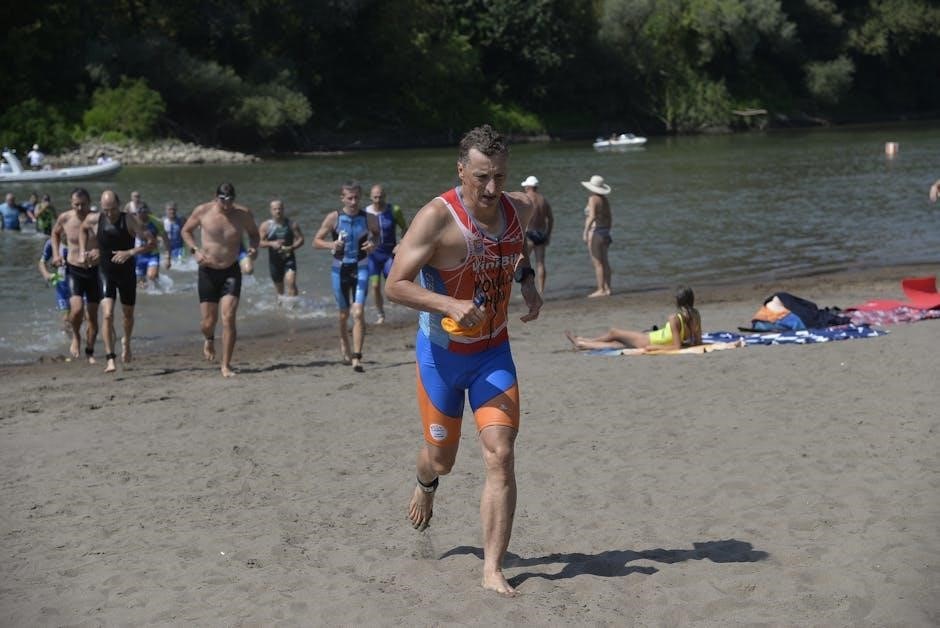
Bike Training ― Peak Performance Phase
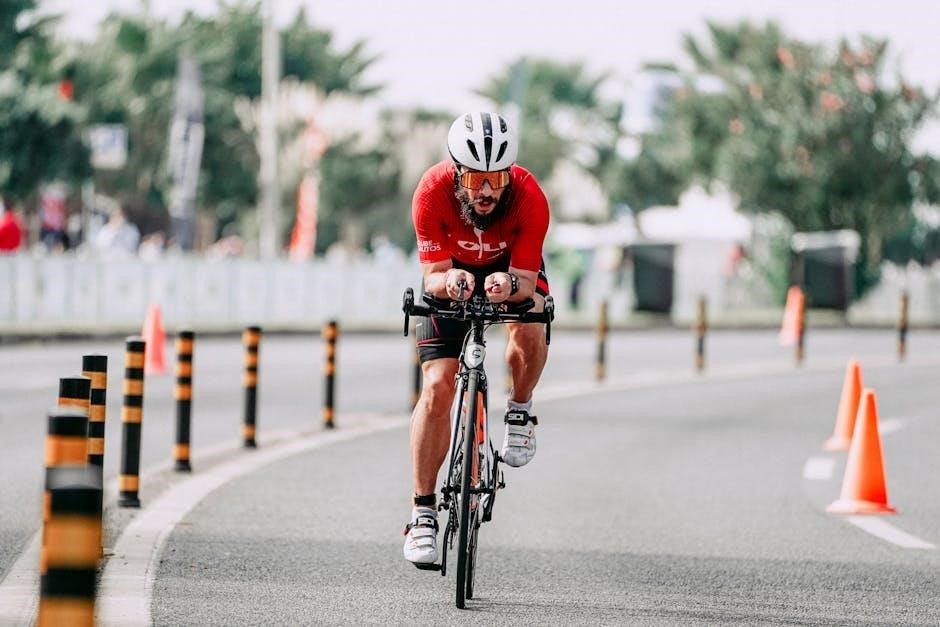
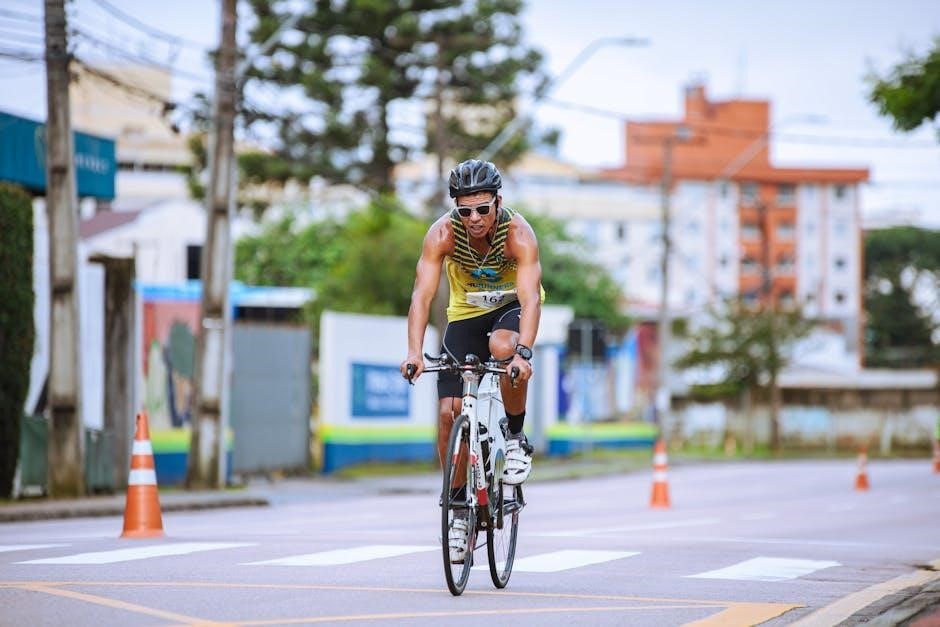
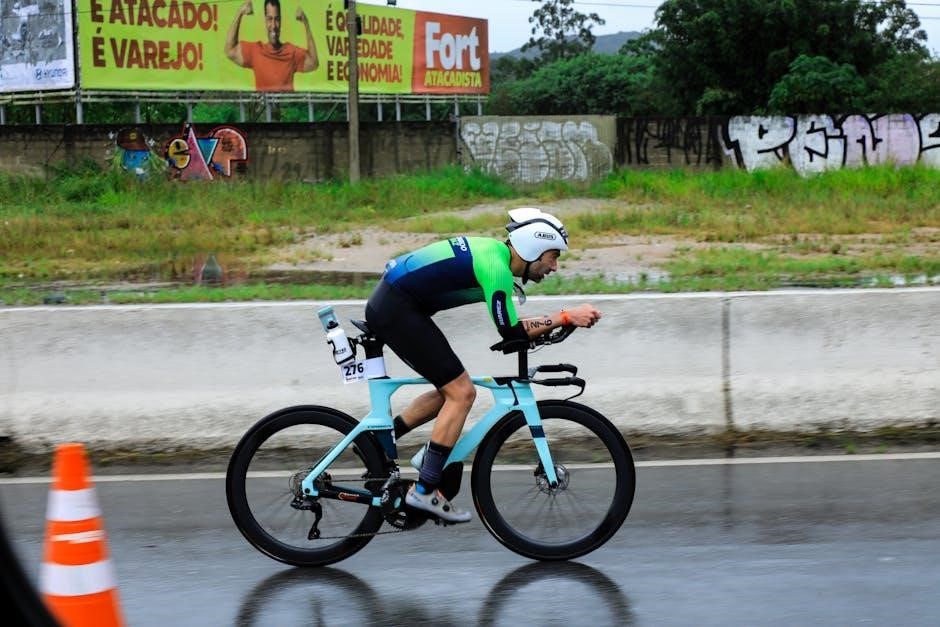
Weeks 9-12 of your Olympic triathlon training plan PDF emphasize race-specific intensity and endurance on the bike. Maintain 2-3 cycling sessions weekly, blending long rides with high-intensity intervals.
Interval workouts should focus on sustained power output at or slightly above your functional threshold power (FTP). Include hill repeats to build strength and simulate course challenges. Brick workouts, combining bike and run, become crucial for race simulation.
One long ride each week should approach or equal race distance (40km), practiced at race pace. Refine your bike handling skills, practicing cornering and transitions. Ensure proper nutrition and hydration strategies are dialed in for race day. This phase aims to maximize your cycling power and prepare you for the demands of the course.
Run Training ౼ Peak Performance Phase
During weeks 9-12 of your Olympic triathlon training plan PDF, running focuses on sharpening speed and endurance for race day. Maintain 3-4 runs per week, incorporating a blend of interval training, tempo runs, and long runs.
Interval sessions should target race pace or slightly faster, improving your VO2 max and running economy. Tempo runs build lactate threshold, enhancing your ability to sustain a fast pace. Brick runs, immediately following bike workouts, are vital for simulating race conditions.
One long run each week should approach or equal race distance (10km), practiced at a comfortable, conversational pace. Prioritize proper running form and cadence to minimize injury risk; Refine your transition from bike to run, practicing quick and efficient gear changes. This phase prepares your legs for the final leg of the triathlon.
Workout Structure & Intensity
Olympic triathlon training PDFs emphasize structured workouts with varying intensities. Understanding training zones—based on heart rate or power—is crucial for effective progression and preventing overtraining.
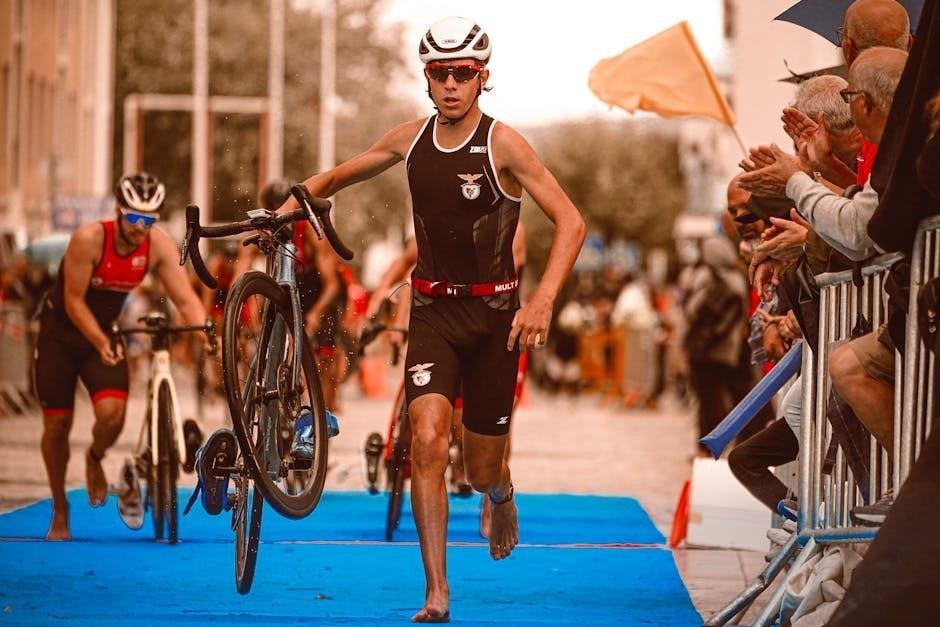
Brick workouts, combining bike and run, simulate race demands.
Understanding Training Zones
Defining your training zones is paramount for a successful Olympic triathlon plan, as highlighted in various PDF resources. These zones, typically based on heart rate or power output (for cycling), dictate the intensity of each workout, ensuring optimal physiological adaptations.
Generally, zones range from Zone 1 (recovery) to Zone 5 (maximum effort). Zone 1 focuses on easy recovery, building aerobic base, and promoting blood flow. Zone 2 builds endurance, improving your body’s ability to use fat as fuel. Zone 3 is tempo training, increasing lactate threshold.
Zone 4 develops speed endurance, while Zone 5 is reserved for short, high-intensity intervals. PDF plans often prescribe specific durations and repetitions within each zone. Accurate zone determination requires a field test, like a Functional Threshold Power (FTP) test for cycling or a maximal heart rate assessment. Utilizing these zones allows for targeted training, maximizing gains and minimizing the risk of injury.
Brick Workouts: Combining Bike & Run
Brick workouts are a cornerstone of Olympic triathlon training, simulating the race-day transition from cycling to running, as emphasized in many training plan PDFs. These sessions involve immediately transitioning from the bike to a run, challenging your cardiovascular system and muscular endurance in a unique way.
The primary benefit is teaching your legs to run effectively while fatigued and dealing with the shift in muscle recruitment. PDF plans typically start with shorter bike legs (30-60 minutes) followed by a 10-20 minute run.
As you progress, increase the bike duration and run distance. Focus on maintaining good running form despite the fatigue. Brick workouts aren’t about speed; they’re about practicing the transition and building resilience. Incorporating these sessions into your weekly schedule, as outlined in resources like TrainingPeaks, will significantly improve your race performance.
Rest and Recovery Strategies
Adequate rest and recovery are non-negotiable components of any successful Olympic triathlon training plan, frequently highlighted within PDF resources. Overtraining leads to injury and burnout, hindering progress. Prioritize sleep – aim for 7-9 hours nightly – to allow your body to repair and rebuild.
Active recovery, such as light swimming or walking, promotes blood flow and reduces muscle soreness. Incorporate rest days into your weekly schedule, as suggested by plans from Garmin and TrainingPeaks. Listen to your body; don’t push through pain.
Nutrition plays a vital role in recovery; replenish glycogen stores and repair muscle tissue with a balanced diet. Consider techniques like foam rolling and stretching to improve flexibility and reduce muscle tension. Proper recovery, detailed in various PDF guides, is as crucial as the workouts themselves.
Nutrition for Olympic Triathlon Training
Fueling is paramount; PDF training plans emphasize strategic nutrition for optimal performance. Prioritize pre-, during-, and post-workout intake to maximize energy and recovery, ensuring success!
Pre-Workout Fueling
Strategic pre-workout nutrition is crucial for sustained energy during Olympic triathlon training, as highlighted in many PDF training plans. Consuming carbohydrates 1-3 hours before a session tops up glycogen stores, providing readily available fuel.
The ideal meal depends on its timing and intensity. A larger meal (e.g., oatmeal with fruit) is suitable 2-3 hours prior, while a smaller snack (e.g., banana, energy bar) works well 30-60 minutes beforehand.
Focus on easily digestible carbohydrates and moderate protein, avoiding high-fat or high-fiber foods that can cause gastrointestinal distress. Hydration is equally important; drink plenty of water in the hours leading up to your workout.
Experiment during training to determine what works best for your body, ensuring you feel energized and comfortable throughout your swim, bike, and run sessions. PDF plans often suggest trial and error to personalize your fueling strategy.
During-Workout Nutrition
Maintaining energy levels throughout an Olympic triathlon requires consistent fueling, a key component detailed in many training plan PDFs. For workouts exceeding 60-90 minutes, carbohydrate intake is essential to prevent glycogen depletion and maintain performance.
Simple sugars, like gels, chews, or sports drinks, are quickly absorbed and provide a rapid energy boost. Aim for 30-60 grams of carbohydrates per hour, adjusting based on intensity and individual tolerance.
Hydration is paramount; drink fluids regularly to replace sweat losses and prevent dehydration. Electrolyte replacement is also crucial, especially in hot weather, to maintain fluid balance and muscle function.
Practice your nutrition strategy during training to avoid surprises on race day. PDF plans emphasize the importance of testing different products and amounts to find what suits your digestive system and energy needs best.
Post-Workout Recovery Nutrition
Replenishing glycogen stores and repairing muscle damage are critical post-workout, as highlighted in comprehensive Olympic triathlon training plan PDFs. Within 30-60 minutes of finishing a session, prioritize a combination of carbohydrates and protein.
Carbohydrates (1-1.2g/kg of body weight) replenish glycogen, while protein (20-30g) aids muscle repair and recovery. Good options include a protein shake with fruit, yogurt with granola, or a balanced meal with lean protein, complex carbohydrates, and healthy fats.
Hydration remains vital; continue to drink fluids to replace any remaining deficits. Electrolytes are also important to restore balance lost through sweat.
Many PDF resources emphasize the importance of consistent recovery nutrition to support adaptation and prevent overtraining. Prioritizing these strategies will optimize your training progress and prepare you for subsequent workouts.
Injury Prevention & Management
Olympic triathlon training PDFs stress proactive injury prevention through proper warm-ups, cool-downs, and strength training. Common issues include runner’s knee and swimmer’s shoulder.
Address pain promptly; rest, ice, compression, and elevation are key initial steps.
Common Triathlon Injuries
Transitioning between disciplines in a triathlon, and the repetitive nature of each sport, predisposes athletes to specific injuries. Olympic triathlon training plan PDFs often highlight these potential issues, emphasizing preventative measures.
Runners frequently experience shin splints, plantar fasciitis, and runner’s knee (patellofemoral pain syndrome). These stem from impact and overuse, requiring proper footwear, gradual mileage increases, and strength work.
Cyclists may suffer from saddle sores, knee pain, and lower back discomfort. Bike fit is crucial, alongside core strengthening and flexible training schedules.
Swimmers are prone to shoulder impingement, rotator cuff tendinitis, and neck pain. Correct technique, shoulder mobility exercises, and adequate warm-up are vital.
Ignoring early warning signs can lead to chronic problems. Prioritize rest, seek professional advice (physical therapist or doctor), and modify training accordingly to ensure a sustainable and injury-free triathlon journey.
Warm-up and Cool-down Routines
Effective warm-ups and cool-downs are non-negotiable components of any Olympic triathlon training plan PDF. They prepare the body for exertion and facilitate recovery, minimizing injury risk and maximizing performance.
Warm-ups should be sport-specific. Swimming benefits from dynamic stretching (arm circles, torso twists) and a gradual swim build. Cycling requires leg swings, torso rotations, and easy spinning. Running involves leg swings, high knees, and butt kicks.
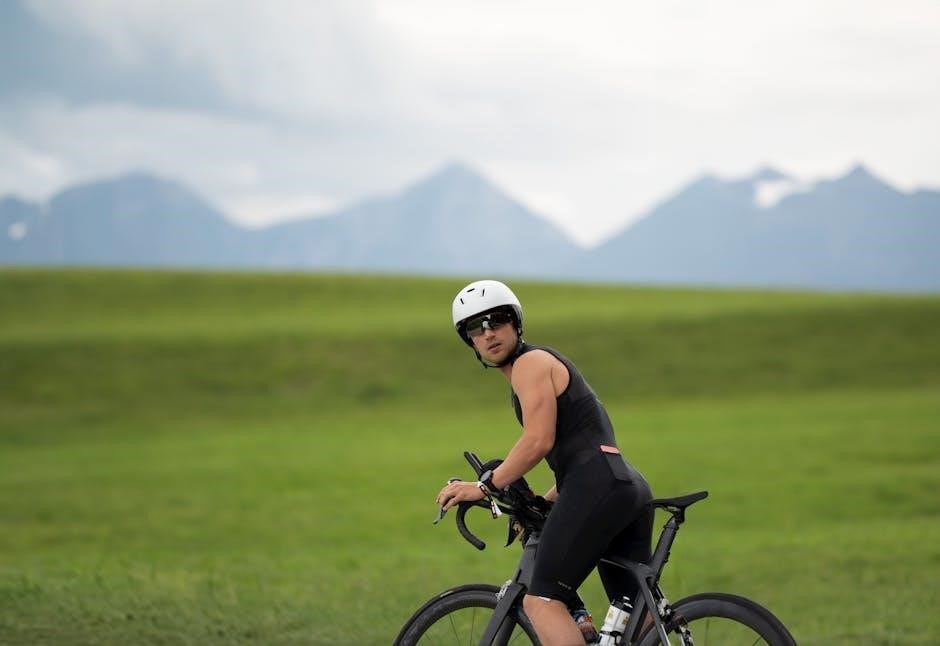
Cool-downs are equally important. Gentle swimming, easy cycling, or walking helps clear metabolic waste. Static stretching (holding stretches for 30 seconds) improves flexibility and reduces muscle soreness.
Prioritize dynamic stretching before workouts and static stretching after. Incorporate foam rolling to address muscle tightness.
Consistent adherence to these routines, as outlined in your training plan, will significantly enhance your triathlon experience and longevity.
Resources & Further Information
Numerous online resources complement your Olympic triathlon training plan PDF, offering valuable support and guidance. Reddit’s r/triathlon forum provides a community for sharing experiences and seeking advice.
Websites like TrainingPeaks host a variety of structured training plans, including USA Triathlon’s intermediate 12-week program. Garmin’s website features a 12-week Olympic plan, focusing on base fitness and progressive overload.
For shorter timelines, 220 Triathlon offers a free six-week supercharged plan. Campfire Endurance Coaching provides comprehensive plans designed to build stamina and skill.
The Australian Catholic Relief Fund (ACRF) offers downloadable PDFs with beginner and intermediate options. Explore these resources to find a plan that aligns with your fitness level and goals.
Remember to consult with a qualified coach or healthcare professional for personalized guidance.